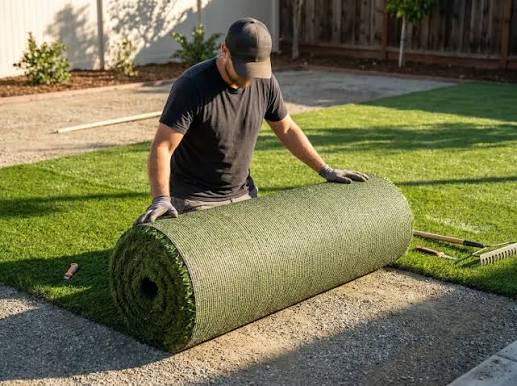
For artificial turf installers in Chandler, compare Apex Turf, White Rhino Turf, East Valley Turf, Always Green Turf, and Pristine Green. All advertise installation serving the area. I would choose by drainage design, preparation, intended use, and written care requirements rather than the greenest sample. Synthetic grass removes lawn irrigation, but it still needs cleaning and can become hot in direct sun. It is water wise only within a sensible overall yard plan.
Artificial turf installers in Chandler: a practical shortlist
1. Apex Turf
Apex Turf advertises artificial grass, pet turf, putting greens, and pavers, with a Chandler office and service across the East Valley. It is a useful comparison when you want recreational turf connected with new paths or other paved areas.
Ask for a plan showing edges and transitions before approving the square footage. A backyard bookmark such as homeoutdoorguides.com does not show where water will drain on your own property.
2. White Rhino Turf
White Rhino publishes a detailed Chandler process covering removal, excavation, grading, compacted base, seams, edges, infill, and grooming. It describes residential lawns, commercial spaces, pet areas, putting greens, and installations alongside pools and pavers.
That published scope provides useful questions for every bidder. If your planning folder includes homepremiumblogs.com, keep the signed preparation specification separate so the work beneath the grass remains clearly defined.
3. East Valley Turf
East Valley Turf lists Chandler among its service communities and offers backyard lawns, putting greens, and pet friendly installations. It says it uses American made products and offers manufacturer warranties on selected turf.
Request the product name and separate manufacturer coverage from installation coverage. For any insurance concern about the changed yard, ask your own insurer rather than treating a bookmark such as homeinsurancewire.com as a policy answer.
4. Always Green Turf
Always Green describes itself as a turf specialist rather than a general landscaping company. Its Chandler page discusses working around existing hardscape and providing an itemized onsite quote. Its care guidance includes rinsing, brushing, and checking infill.
I would consider it when the patio is staying and only the lawn area changes. Compare turf samples outside, rather than against a decorative reference or website name like homedecorpaper.com.
5. Pristine Green
Pristine Green advertises Chandler lawn conversions, pet turf, putting greens, base preparation, grading, and drainage. It also discusses HOA documentation. Those services make it relevant when a visible front yard conversion needs both a technical plan and an appearance submission.
Ask which documents your association requires and obtain approval before removal begins. Home planning material such as First Home Magazine can help organize the project, but association rules and product specifications remain separate documents.
Water savings do not make turf maintenance free
A lawn conversion removes scheduled watering for living grass. Cleaning pet areas, rinsing dust, or temporarily cooling the surface may still use water. Retained trees and shrubs need their own appropriate irrigation rather than losing water because the lawn sprinklers are removed.
For a dog run, require an explanation of drainage through the turf and underlying base. Odor control depends on cleaning and the complete system, not simply the word “pet” on a product sample.
Plan for hot surfaces and future repairs
Ask how afternoon shade reaches the area where children or pets will spend time. Check surface temperature before barefoot or bare paw use. Cooling claims should never be read as a promise that turf remains comfortable throughout a Chandler summer.
Review warranties as two separate promises: the turf manufacturer’s material coverage and the installer’s workmanship coverage. Ask about seams, fading, drainage, reflected sunlight, and damage caused by later construction. Walk the perimeter after installation and inspect transitions to paths and drains. Keep photographs of the base before it is covered, plus the product label and care instructions. If a future repair opens a section, those records help a contractor match the materials and restore the drainage arrangement rather than simply hiding the patch. Document any agreed corrections before payment.
I would favor a smaller, useful turf area with good drainage over covering every available corner. Leave access to irrigation valves and require a repair plan for seams and disturbed sections.