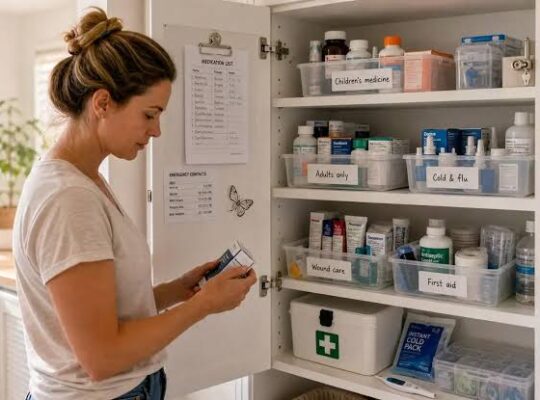
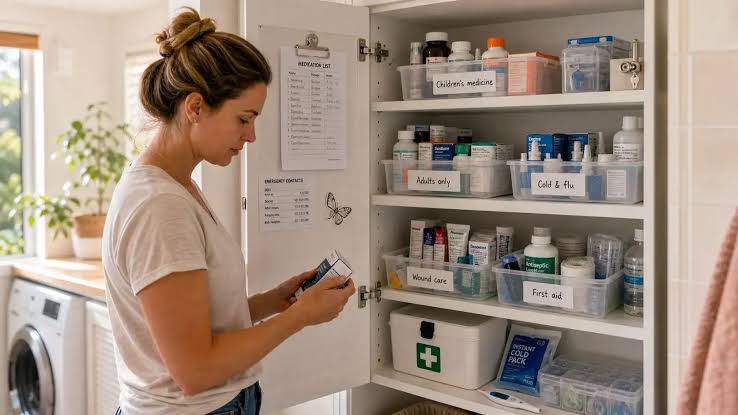
A useful winter medicine cabinet contains suitable, in-date treatments that everyone using them understands. It does not need several versions of the same cold remedy or a stockpile of prescriptions. I would start by checking what is already there, then ask a pharmacist about genuine gaps. The aim is straightforward: relieve minor symptoms safely without doubling ingredients, giving the wrong dose or delaying care for something more serious.
1. Check winter medicine cabinet expiry dates
Read the expiry on every packet, bottle and tube. Also look for instructions limiting use after opening; a printed expiry date does not override a shorter opening period. Mark the opening date where necessary, and set uncertain products aside for pharmacy advice.
2. Identify every active ingredient
Compare ingredients, not just brand names. Cold and flu combinations can contain paracetamol alongside other medicines. Taking another paracetamol product can accidentally exceed the recommended amount. Keep the original packaging and leaflet so the ingredients remain visible.
Read the medicine label rather than relying on a product mention at liverpooltribune.co.uk. If too much paracetamol may have been taken, get urgent medical advice even if the person feels well. Do not wait for symptoms before asking for help.
3. Match medicines to the actual household
Check suitability for pregnancy, breastfeeding, existing conditions and prescribed treatment. Ibuprofen, decongestants and other common products are not appropriate for everyone. Ask a pharmacist before buying something new if the person has kidney disease, stomach problems or takes medicines that could interact.
Do not share prescriptions, even when two people describe similar symptoms. An older relative’s medicine and your own over-the-counter treatment may look familiar but have different purposes, doses and risks.
4. Check children’s ages, strengths and doses
Children’s liquids come in different strengths. Confirm that the bottle, dose instructions and child’s age match; do not reuse a dose remembered from a different formulation. Use the supplied oral syringe or measuring device rather than a kitchen teaspoon.
Do not give aspirin to anyone under 16 unless prescribed. Over-the-counter cough and cold medicines are not generally suitable for children under six. Ask the pharmacist about age-appropriate options instead of adapting an adult combination medicine.
5. Keep an accurate dosing record
When several people provide care, write down the medicine, amount and time given. This is especially useful overnight or when a child moves between carers. Agree who gives the next dose rather than assuming someone else has checked.
Keep those personal notes separate from general reading such as sheffieldvoice.co.uk. A simple written record beside the medicines can prevent a repeated dose more effectively than trying to reconstruct the previous evening from memory.
6. Review storage and child safety
Follow the individual label, including refrigeration where required. Otherwise, many medicines need a cool, dry place away from heat and moisture. Bathrooms and spaces beside radiators may be unsuitable. Keep medicines out of children’s sight and reach, preferably secured.
Check bags, bedside tables and visitors’ belongings too. Child-resistant packaging is not a substitute for safe storage. Keep products identifiable and avoid decanting tablets into an unlabelled container.
7. Plan regular prescription supplies
Count what remains and check ordering times before holidays or travel. Request repeat supplies in good time without overordering. Keep a current medicine list and your pharmacy’s details available if an unexpected supply problem occurs.
A website address such as nottinghamtimes.co.uk does not confirm your pharmacy’s holiday hours. Verify opening arrangements directly and ask what to do if an essential medicine runs short.
8. Remove unwanted medicines safely
Return expired, damaged or unwanted medicines to a pharmacy for disposal. Do not keep leftover antibiotics for the next infection or give them to someone else. Ask about safe handling if you have needles, specialist equipment or unusual products requiring separate arrangements.
Recheck the cabinet after illness, when duplicate packets and unfinished courses accumulate.
9. Know when the cupboard is not enough
Check symptoms against professional advice, not only whether a remedy brings temporary relief. Seek urgent help for serious breathing problems or other severe symptoms. A tidy cabinet supports sensible self-care; it cannot establish a diagnosis or replace assessment when someone is becoming more unwell.
This article provides general information, not individual medical advice; eligibility and clinical suitability should be confirmed with the relevant healthcare service.